Seth Thomas Clocks
The Seth Thomas company is closed and is no longer in operations and no parts or specific information is available to us to share.
We do not have any parts or information on any specific Seth Thomas clock over 5 years old.
PARTS: If you need parts for a Seth Thomas Clock, try Timesavers.com as they have many generic clock parts that might work for you.
VALUE: If you are trying to determine the value of your Seth Thomas clock, please click here.
Information and History and Heritage of Seth Thomas
The name Seth Thomas is symbolic of value and excellence of craft, and the variety of sophisticated styles it has produced since 1813. As the longest established clock maker in the United States (nearly 200 years), Seth Thomas is recognized as one of the most respected brands of clocks in the world.
During its early years, Seth Thomas quickly gained an impeccable reputation for producing the masterfully crafted grandfather clocks. Soon after, the company was also known for designing and producing some of the country's most renowned tower clocks, including the tower clock at Grand Central Station in New York.
Today, Seth Thomas's reputation continues to be well earned. Seth's blend of quality and impressive design has made it the industry's marquee for trend-setting style. The posh collection of clocks ranges from classic strike and chimes to unique styles crafted in contemporary metals, colorful resins and aged finishes. In addition to decorative mantel, wall and table top clocks, Seth Thomas produces a wide variety of timepieces perfectly suited for gift giving, the office and travel. It is a name recognized and trusted by consumers of all age groups and background.
To learn more about the historical accomplishments and development of the Seth Thomas brand, read below:
Seth Thomas Mantle Clock Historic Timeline
1785 - Seth Thomas was born in Wolcott, CT.
1807 - Seth Thomas became an apprentice to Eli Terry.
1810 - Thomas worked as a carpenter for Eli Terry.
1811 - Terry sold the business to Seth Thomas and partner Silas Hoadley.
1813 - Seth Thomas sold his interest to Hoadley and moved to Plymouth Hollow, CT. Seth Thomas founded The Seth Thomas Clock Company with approximately 20 employees.
1814 - The Seth Thomas Clock Company began producing box clocks taking a cue from the increased sales of these types of clocks by Eli Terry.
1815 - Thomas again follows Terry's lead and begins producing pillar and scroll clocks with rack and snail movement.
1853 - The Seth Thomas Clock Company was incorporated to ensure the company's continuance after the death of Seth Thomas.
1859 - Death of Seth Thomas, founder of The Seth Thomas Clock Company. Seth Thomas's sons, Seth Jr., Edward, and Aaron took over the business. Aaron acted as President.
1860 - The production of Regulator clocks begins. (The No. 2 Regulator was produced for 90 years.)
1865 - The town of Plymouth was divided by an Act of Legislature. The western portion, previously known as Plymouth Hollow, was named Thomaston in honor of Seth Thomas in 1875.
A new separate company called, "Seth Thomas Sons & Company" was created to manufacture lever movements using spring balances for mantel clocks.
1869 - The first perpetual calendar clock was produced by The Seth Thomas Clock Company.
1872 - The first Seth Thomas tower clock was made in Thomaston. Between 1872 and 1927, Seth Thomas was one of the major producers of tower clocks, not only in the United States, but also worldwide.
1874 - The company opened their first London office.
1875 - The Seth Thomas Clock Co. was given a contract to make a centennial tower clock for Independence Hall in Philadelphia. The work was completed on June 24, 1875. The total cost of the clock was $ 20,000. It's bell weighed 13,000 pounds...one thousand pounds for each of the original 13 colonies.
1876 - The Seth Thomas Clock Co. invented the first alarm clock and was awarded a patent for its invention the same year.
1879 - Seth Thomas Sons & Co. was brought back into the parent company.
1882- Aaron Thomas retires as president and William Thomas Woodruff took over.
1884 - The Seth Thomas Clock Company begins the manufacture of watches.
1885 - The company produced 135,000 clocks a year.
1897 - The manufacture of metronomes was added to the operations at the Seth Thomas factory and continued until 1984.
1900 - The production of hall clocks began - long case clocks, glass fronts, pendulums, & brass-cased weights. These were produced for 10 years.
1904 - The company began production of tambour clocks.
1915 - The production of pocket watches stopped...total production was approximately 4 million timepieces.
1919 - Seth E. Thomas Jr. (great grandson of Seth Thomas) took over as president.
1924 - A new line of banjo clocks was introduced.
1928 - Seth Thomas produced the largest single-faced illuminated dial clock in the world for the Colgate Company building in New Jersey. The dial is 50 feet in diameter with hands weighing nearly a ton each. The clock is so large that at night it is visible from all of lower Manhattan Island in New York City. Although the Colgate Company no longer occupies the building, the clock is still active today. Plans for redevelopment to the facility include a special emphasis on the clock.
1931 - The Western Clock Company and The Seth Thomas Clock Company merged to become divisions of General Time Corporation. Seth E. Thomas, great-grandson of the original founder of The Seth Thomas Clock Company was the first Chairman of the Board of General Time Corporation until his death in 1932.
1932 - The Seth Thomas Division expanded its commercial line with items such as parking meters, range timers, and industrial devices. It held the major market share in parking meter movements and range timers for a number of years. The company produced electric, battery or main spring movements with plastic or bakelite cases.
1936 - The name of Western Clock Division of General Time Corporation was changed to Westclox Division, the name that had been used for many years as a trademark on clock dials.
1938 - Westclox® and Seth Thomas® contributed to America's World-War II efforts by producing highly sophisticated items for the Army, Air Force, and Navy. It is interesting to note that some of America's newest aircraft carriers of that time had as many as 64 Seth Thomas® marine clocks, while some of the giant battleships carried a complement of 77. Seth Thomas® marine clocks were standard equipment on many types of fighting craft from PT boats and submarines up through merchant and naval ships of every description.
1942 - The production of household clocks was suspended during this time by General Time Corporation to devote all of its manufacturing capabilities to the war effort. During these years, Westclox Division was one of the nation's largest producers of fuses for the War Department and also manufactured arming mechanisms for the Sidewinder missiles. They were also awarded an R&D contract to work on the 2.75 rocket.
During the war, General Time Corporation continued to advertise its two brands in major publications even though clocks were not available for consumer purchase. Seth Thomas® ads focused on its production of marine clocks and actually showed a cut-away of a Naval vessel with detailed installation of Seth Thomas® clocks. Other creative advertising themes were used, such as "Betty goes shopping with shears", urging customers to cut out pictures of Seth Thomas® clocks to be purchased "when her ensign comes home". During the war years (1942-1945), American consumers were urged in Westclox® and Seth Thomas® ads to buy war bonds to support "our boys at the front".
Due to the shortage of metals during the war years, The Westclox Division and other domestic clock manufacturers produced a "War Alarm" for domestic use with a corrugated cardboard case.
1955 - The Seth Thomas factory was nearly destroyed by a major Connecticut flood. Many of its manufacturing facilities were relocated to General Time factories in Georgia, Illinois and other areas.
1959 - Westclox® introduced clocks with dual "Drowse" alarm features. It was the only one in the industry with a choice of 5 or 10-minute drowse (snooze).
1964 - The Seth Thomas Division introduced the first battery strike movement in America.
1969 - General Time Corporation was acquired by Talley Industries of Arizona.
1972 - Westclox® pioneered the first Quartz movement in clocks, trademarked "Quartzmatic™". Both the Westclox and Seth Thomas divisions produced clocks with quartz movements. This technology provided clocks that are highly accurate and, under normal and consistent pressure and temperature, an accuracy of plus or minus one minute per year can be obtained. This technology was used in the Apollo space command module.
1988 - General Time Corporation, consisting of the Westclox® and Seth Thomas® brands and the Westclox operation in Canada, was acquired from Talley Industries by current management.
1990 - General Time Corporation acquired from Talley Industries the rights to use the name of Westclox ®, worldwide. General Time began operations in England under the name of General Time Europe for distribution of its products throughout the European countries.
2001 - Seth Thomas, America's oldest clock company has a new beginning.
Seth Thomas, recognized by American consumers for its quality and precision for nearly two centuries, joins hands with The Colibri Group, a prominent name in luxury brands for over 20 years. This partnership which combines Seth Thomas's legendary tradition with the financial strength and technical expertise of the Colibri Group promises to take the Seth Thomas brand to even greater heights.
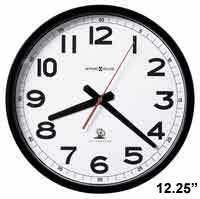
 Atomic Clocks

 We promise to
provide quality products and the best service possible. If you have a question about
any product we carry, please call us at 1-866-402-8714 M - F 10:00 - 6:00 EST., Sat 10:00 - 3:00
We promise to
provide quality products and the best service possible. If you have a question about
any product we carry, please call us at 1-866-402-8714 M - F 10:00 - 6:00 EST., Sat 10:00 - 3:00